


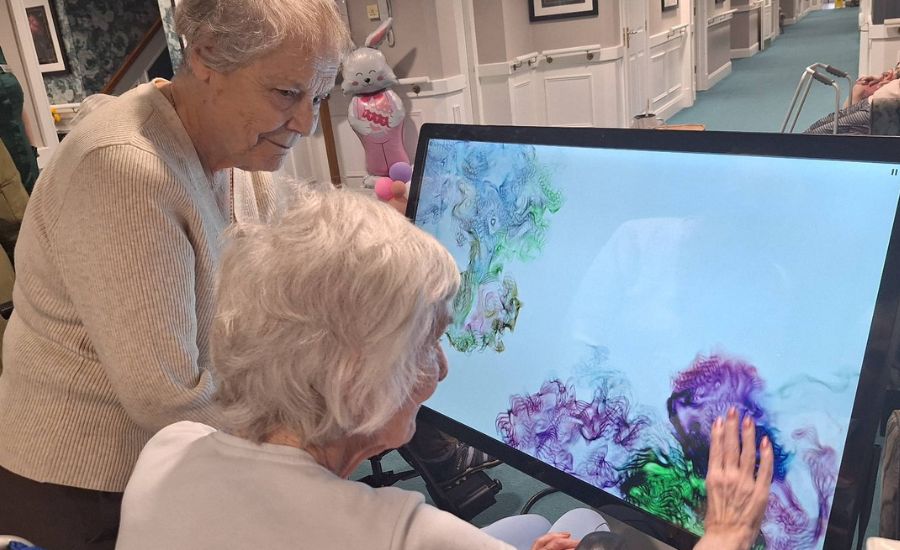
Interactive Touchscreen Tables for Care Homes: More Than Just Technology
For many care homes, finding meaningful daily activities that engage residents of different abilities can be a constant challenge. Traditional games, television, printed activities, and even some sensory products can struggle to hold attention for long periods — especially for residents living with dementia, reduced mobility, or cognitive decline.
This is where interactive touchscreen tables for care homes are starting to make a real difference.
Rather than being “just another screen”, touchscreen activity tables are becoming shared social spaces that encourage conversation, laughter, movement, reminiscence, and cognitive stimulation in ways that are simple and accessible for both residents and staff.
Why Care Homes Are Moving Towards Interactive Technology
Modern care environments are under increasing pressure to provide:
- Meaningful resident engagement
- Personalised activities
- Dementia-friendly experiences
- Group participation opportunities
- Inclusive activities for varying abilities
At the same time, activity coordinators often face:
- Limited staffing
- Limited preparation time
- Residents with mixed cognitive abilities
- Reduced attention spans
- Difficulties finding activities suitable for everyone
Interactive touchscreen tables help bridge that gap.
Unlike traditional tablets or computers, large-format touchscreen tables are designed for:
- Group interaction
- Wheelchair accessibility
- Seated social activities
- Intuitive touch gestures
- Highly visual experiences
Residents simply touch, swipe, tap, drag, colour, explore, or play together around the screen.
The Power of Shared Experiences
One of the biggest differences between touchscreen tables and individual devices is the social aspect.
Many activities naturally encourage:
- Conversation
- Teamwork
- Turn-taking
- Eye contact
- Reminiscence
- Shared humour
This can be especially valuable in dementia care settings where residents may otherwise withdraw from group participation.
Simple interactive experiences such as:
- Popping bubbles
- Sensory fluid effects
- Virtual puzzles
- Colouring scenes
- Music activities
- Quizzes
- Card games
- Interactive photographs
Can often generate far more engagement than passive entertainment.
Some care homes report residents staying engaged for significantly longer periods compared to projector systems or traditional paper-based activities.
Dementia-Friendly Design Matters
Not all touchscreen systems are equal.
Many consumer tablets and Android devices are designed for the general public — not for care environments.
This can create problems such as:
- Confusing menus
- Accidental internet browsing
- Pop-up adverts
- Locked screens
- Unwanted downloads
- Difficult navigation
- Residents accidentally exiting activities
For care homes, simplicity is critical.
The most effective interactive touchscreen tables are specifically designed with:
- Large clear icons
- Simplified navigation
- Locked-down interfaces
- Carefully selected activities
- Easy staff controls
- Minimal setup
This allows staff to focus on resident interaction rather than troubleshooting technology.
More Than Games
While games are popular, touchscreen tables are increasingly being used for:
- Reminiscence therapy
- Music sessions
- Gentle physical interaction
- Cognitive stimulation
- Visual sensory engagement
- Family visits
- Group quizzes
- Care home information displays
- One-to-one engagement
- Intergenerational activities
Many homes also use touchscreen tables during quieter parts of the day to help reduce boredom, anxiety, or agitation.
Touchscreen Tables vs Projector Systems
Some care providers compare touchscreen tables with projector-based sensory systems.
While projector systems can create impressive visuals, they also come with practical limitations:
- Calibration issues
- Lighting sensitivity
- Ongoing subscription costs
- Discontinued lamps or hardware
- Complex setup
- Limited tactile interaction
Interactive touchscreen tables provide direct hands-on engagement instead of passive floor projection.
Residents can physically interact with content using natural touch gestures, which often feels more intuitive and rewarding.
Battery Life and Real-World Use
One overlooked factor when choosing an interactive touchscreen table is battery performance.
In real care environments, tables may need to operate across:
- Morning activities
- Afternoon sessions
- Lounge areas
- Dining rooms
- Memory care units
Short battery runtimes or long charging times can quickly become frustrating.
Care homes should look for systems that offer:
- Fast recharge times
- Long operating sessions
- Pass-through charging
- Easy charging methods
- Safe battery technology
These practical details make a huge difference to day-to-day usability.
Why Interactive Touchscreen Tables for Care Homes Are Growing in Popularity
As digital engagement becomes more important within health and social care, interactive touchscreen tables are moving from being viewed as “luxury technology” to becoming practical everyday tools for wellbeing and engagement.
For many homes, they now form part of:
- Dementia care programmes
- Wellbeing strategies
- Activity schedules
- Sensory support
- Resident social interaction
- Family engagement
Most importantly, they help create moments of connection.
And in care environments, those moments matter enormously.
Choosing the Right Interactive Touchscreen Tables for Care Homes
Before purchasing, care homes should consider:
- Ease of use
- Software simplicity
- Ongoing support
- Included training
- Battery performance
- Warranty cover
- Screen size
- Mobility
- Accessibility
- Content suitability
The best systems are not simply large tablets — they are carefully designed solutions built specifically for the realities of care environments.
Frequently Asked Questions
What are interactive touchscreen tables for care homes?
Interactive touchscreen tables are large touch-enabled devices designed to support activities, engagement, social interaction, and dementia-friendly experiences within care environments.
Are touchscreen tables suitable for residents with dementia?
Yes. Many interactive touchscreen tables for care homes are designed specifically for dementia care, with simple interfaces, sensory activities, and easy-to-use touch interaction.
What activities can residents use on touchscreen tables?
Residents can enjoy quizzes, colouring activities, music, puzzles, sensory visuals, reminiscence content, and multiplayer games designed for group participation.
To learn more about touchscreen activity solutions for dementia care, residential care homes, NHS settings, and community environments, visit
Happi Table.
As the use of interactive touchscreen tables for care homes continues to grow, many providers are also exploring guidance and best practices around dementia care, resident wellbeing, and meaningful engagement. Organisations such as the
Alzheimer’s Society, the
NHS dementia support pages, and the
Care Quality Commission (CQC) all highlight the importance of person-centred care, social interaction, and activities that support quality of life within care environments.